

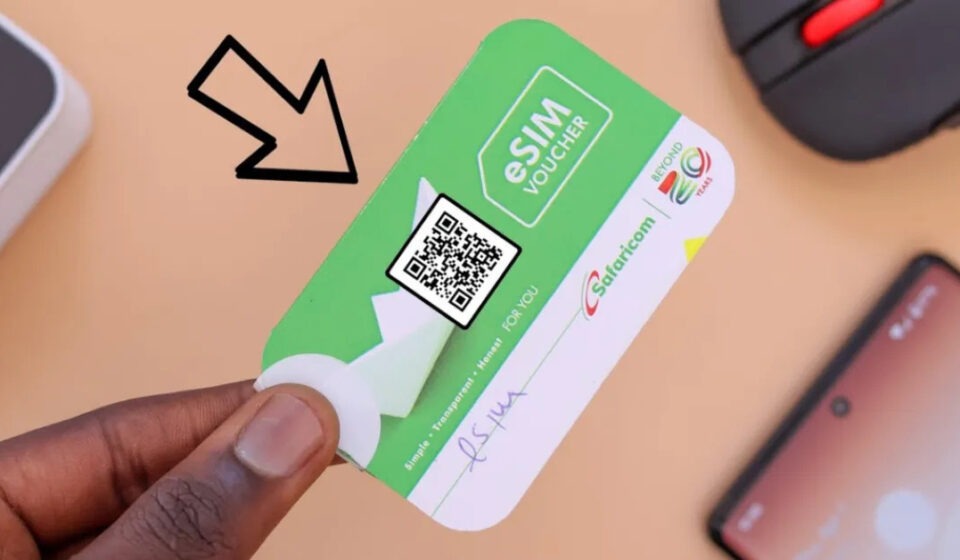

Kenyans may soon have less reason to queue at Safaricom shops for SIM services, as the telecommunications company moves to let customers request and activate digital SIM cards through their phones. However, the convenience comes with one catch: only compatible smartphones can support the technology.
Safaricom has introduced an eSIM request and activation feature on its My OneApp platform, allowing customers to apply for digital SIM cards, track their applications and complete activation without visiting a physical outlet.
The feature allows eligible customers to manage the eSIM application process through the app, marking another step in the company’s efforts to expand its digital self-service services.
How customers can request and activate an eSIM
Customers seeking to switch to an eSIM can begin by opening the My OneApp application on their smartphones. Those who do not have the app can download it from the Google Play Store or Apple App Store and ensure they are using the latest version.
After opening the app, customers should navigate to the profile section and look for the eSIM request option. They can then follow the prompts to submit their application and use the app to monitor its progress.
Once the request has been processed, customers should follow the activation instructions provided through the app to install and activate the digital SIM on their devices. The exact prompts may vary depending on the phone and the current app version.
The process is intended to eliminate the need for customers to visit a physical Safaricom outlet solely to request and activate an eSIM, making the service more accessible to eligible users.
Not every smartphone supports eSIM
Despite the convenience, the service is not available to every mobile phone user. Customers must first confirm that their smartphones support eSIM technology before starting the application process.
An eSIM is a digital SIM embedded in a compatible device, allowing users to connect to a mobile network without inserting a removable plastic SIM card. Depending on the device, users may also be able to manage multiple mobile plans without physically changing SIM cards.
Customers whose phones do not support eSIM technology will still need to rely on compatible physical SIM options.
The introduction of the feature reflects a broader shift towards digital telecommunications services, as companies seek to reduce in-person transactions and give customers greater control over their accounts.
For Safaricom, expanding eSIM services through My OneApp could help simplify customer service while reducing the need for routine visits to retail outlets.
However, the overall impact will depend on the number of compatible devices in use, how easily customers can complete the application process and whether activation works smoothly across supported smartphones.
Customers planning to make the switch should check their phone’s specifications, open My OneApp and follow Safaricom’s official instructions before proceeding.