

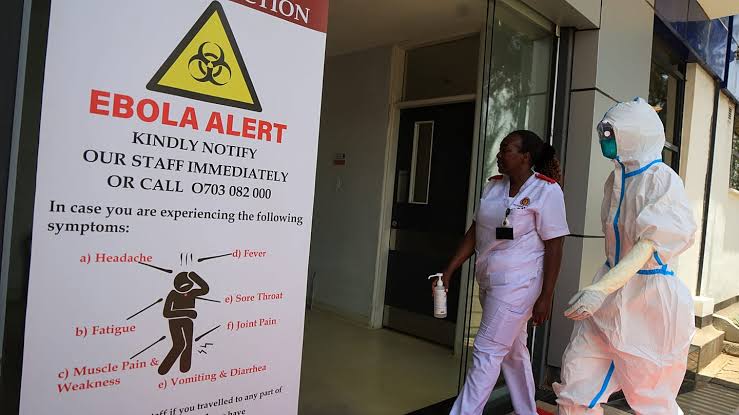

Kenya’s healthcare system faces a major test as Ebola infections rise to seven, including three healthcare workers who treated the country’s first patient. With medical personnel now among those infected, questions are emerging about the risks facing frontline workers as authorities race to contain the outbreak.
According to the Ministry of Health, four new infections were confirmed. The patients include three healthcare workers who treated the initial case and a male relative of the patient who died.
The four patients were already in quarantine when they tested positive, allowing health authorities to identify the infections and isolate them for treatment.
The country’s first confirmed patient was a Kenyan man who had travelled from the Democratic Republic of Congo through Uganda before arriving in Nairobi on October 3. He died on October 5 after developing symptoms associated with the disease.
Health officials have identified 130 contacts linked to the initial case. Of these, 128 had been traced and placed under quarantine, while efforts continued to locate the remaining two.
The outbreak involves the Bundibugyo strain of Ebola, for which there is currently no approved vaccine or specific treatment. Patients receive supportive medical care to manage symptoms and complications.
Despite the rising number of infections, the Ministry of Health has maintained that the risk to the general public remains low because the confirmed cases have been linked to the initial patient and there is no evidence of wider community transmission.
The infections among healthcare workers, however, highlight the importance of protective equipment, infection prevention measures and effective isolation procedures in health facilities.
Authorities are continuing contact tracing, surveillance and screening measures to prevent further transmission as Kenya works to contain the outbreak.
The situation has also renewed attention on border surveillance and the early detection of infectious diseases among travellers arriving from affected regions.