

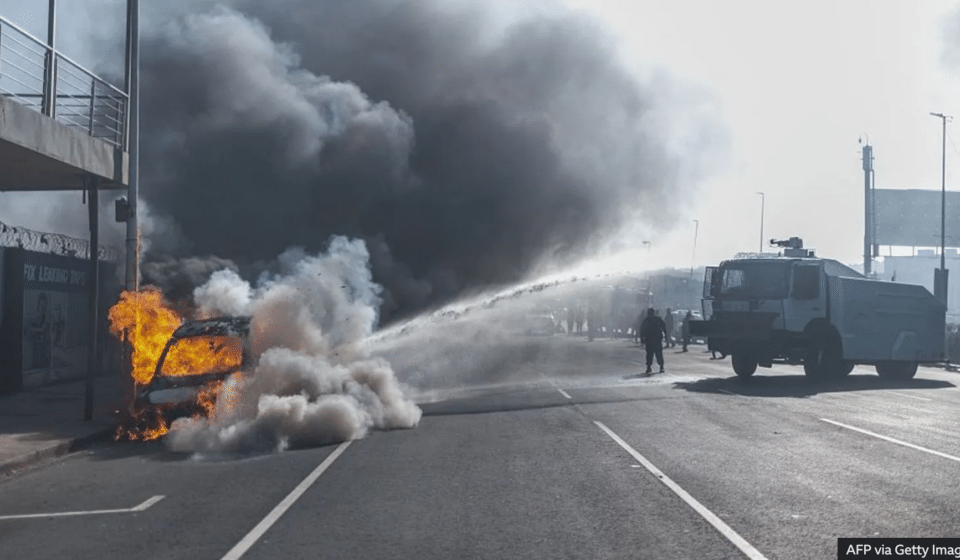

A dispute over immigration policy has erupted into a wave of destruction in South Africa, with foreign-owned businesses targeted and at least 24 vehicles set ablaze as anti-immigration protests descended into violence in Durban and Soweto. The unrest has exposed the dangerous consequences of mounting hostility towards migrants, turning a debate over asylum procedures into a crisis involving damaged property, disrupted businesses and fears for the safety of foreign nationals.
The violence broke out as demonstrators protested against changes to the processing of asylum applications following a Constitutional Court ruling. According to reports from South African authorities and international news organisations, 14 vehicles were torched in Durban, while another 10 were set alight in Soweto, in Johannesburg.
Foreign owned shops were also vandalised and looted during the unrest, while police moved to contain the situation and prevent further destruction. The demonstrations took place near Home Affairs offices responsible for processing asylum applications, where tensions had been building over the government’s approach to immigration.
At the centre of the dispute is a July 2026 Constitutional Court ruling that removed certain procedural barriers that had prevented some people from applying for asylum. The ruling means that asylum seekers cannot automatically be denied access to the application process because they entered South Africa irregularly or failed to comply with certain reporting deadlines.
Following the ruling, the Department of Home Affairs issued a directive instructing refugee reception officers to accept applications from people seeking protection, including those whose entry into the country did not follow the prescribed immigration procedures.
However, the directive triggered a backlash among groups opposed to undocumented immigration. Protesters argued against the government’s approach, with some demanding the deportation of foreigners they believe are living in the country unlawfully.
The dispute was further complicated by claims circulating online that the court ruling effectively granted undocumented migrants permission to remain in South Africa. Government officials rejected that interpretation, clarifying that being allowed to submit an asylum application does not automatically confer refugee status, permanent residency or citizenship.
The distinction is important because an asylum application is a request for protection that must be assessed through the legal process. Removing procedural barriers to submitting such an application does not mean that every applicant will be approved.
Despite these clarifications, tensions escalated on the streets of Durban and Soweto, where demonstrations turned into clashes, property destruction and attacks on businesses. In Soweto, the unrest centred around the Orlando West area, while in Durban, vehicles were burned and businesses were targeted.
South African police authorities condemned the violence, warning that the right to demonstrate does not give protesters permission to commit crimes, attack people or destroy property. Acting National Police Commissioner Lieutenant General Puleng Dimpane said those responsible for the destruction would be identified and pursued for prosecution.
Three foreign nationals were arrested in Durban following reported assault incidents linked to the unrest. Police also increased their presence in affected areas as authorities worked to restore order and prevent further violence.
The violence has unfolded against a wider backdrop of anti-migrant sentiment in South Africa, where some groups have blamed foreign nationals for unemployment, competition for business opportunities and pressure on public services. These grievances have contributed to repeated demonstrations, with foreign-owned small businesses often becoming targets during periods of heightened tension.
However, blaming migrants collectively for the country’s economic challenges risks oversimplifying problems that also involve unemployment, inequality, governance and limited economic opportunities. The destruction of businesses can also undermine local livelihoods, including those of workers and customers who depend on them.
The unrest has raised fresh concerns about the vulnerability of foreign nationals who operate small shops and other enterprises in affected communities. Beyond the immediate cost of replacing burned vehicles and repairing damaged premises, violence can disrupt trade, discourage investment and deepen divisions between communities.
The government’s response has also highlighted the difficulty of implementing court decisions on asylum while managing public concerns over immigration. Officials must ensure that applications are processed in accordance with the law while addressing operational challenges at refugee reception offices and countering misinformation about the legal changes.
On Friday, October 9, the Department of Home Affairs withdrew the directive following the violence and mounting concerns over its implementation. The withdrawal came as authorities considered how to respond to the court ruling while managing pressure on refugee reception centres and public order.
The reversal underscores the political and administrative pressure created by the dispute, although it does not erase the underlying legal questions surrounding access to asylum procedures.
For foreign nationals whose shops were attacked and business owners whose vehicles were destroyed, the immediate concern is the cost of the violence and whether they can safely resume their activities. For authorities, the challenge is to prevent further attacks while ensuring that immigration disputes are addressed through lawful processes rather than intimidation.
The events in Durban and Soweto have once again placed South Africa’s immigration debate under scrutiny, raising difficult questions about how the country balances border management, access to asylum, public frustration and the protection of human rights.
As investigations continue, the central issue remains whether disagreements over immigration can be addressed without ordinary people, particularly vulnerable migrants and small business owners, bearing the cost through violence and destruction.