

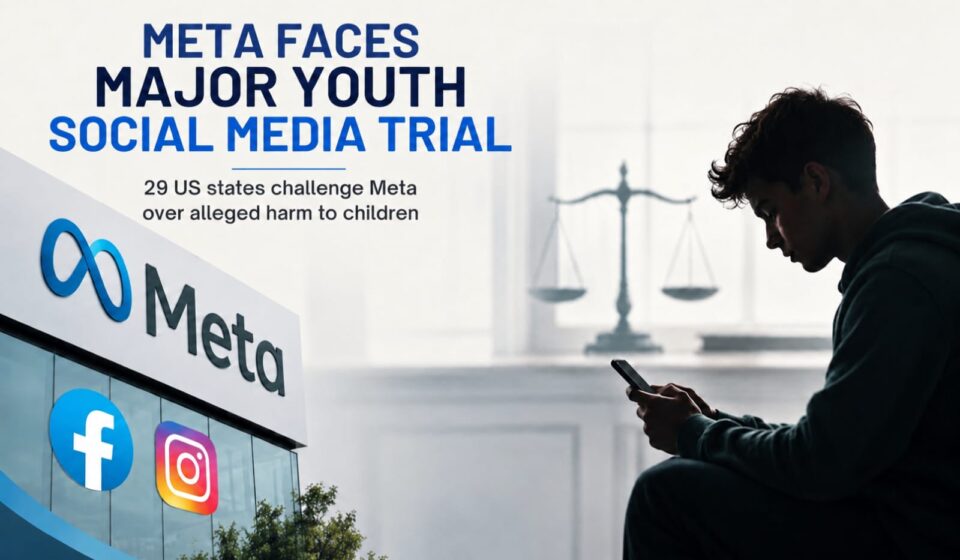

Meta is facing a major legal challenge in the United States that could force sweeping changes to how children and teenagers use Instagram and Facebook.
A jury trial involving 30 US states is examining allegations that Meta violated child privacy laws and deliberately designed its platforms to keep young users engaged for longer periods.
The states are seeking potentially more than $1 trillion in damages and are demanding significant changes to Meta’s platforms.
Among the proposed measures are parental verification for teenage accounts, restrictions on recommendation algorithms, limits on image filters, an end to autoplay videos and infinite scrolling, and restrictions on multiple accounts and disappearing content such as Instagram Stories.
The states also want Meta to remove like counts for young users and reduce notifications that encourage teenagers to repeatedly return to the platforms.
Prosecutors argue that Meta’s design features have contributed to harmful effects on young users, including social comparison and other concerns surrounding youth wellbeing.
Meta has denied the allegations, maintaining that it has a long-standing commitment to protecting young people on its platforms.
The case comes after a separate ruling in New Mexico, where a judge fined Meta $942 million and ordered the company to introduce restrictions aimed at protecting users under 18.
The New Mexico court also declared Meta a “public nuisance,” arguing that its platforms had contributed to harm affecting young people. Meta has said it will appeal that ruling.
The latest case is being heard by US District Judge Yvonne Gonzalez Rogers in California. The 30 states involved represent nearly two-thirds of the US population.
A ruling against Meta could therefore have consequences far beyond the states involved, potentially forcing the company to introduce nationwide changes to some of the most familiar features of Instagram and Facebook.
The trial has renewed scrutiny of how social media companies design platforms for young users and whether features intended to increase engagement can also expose children and teenagers to harm.