

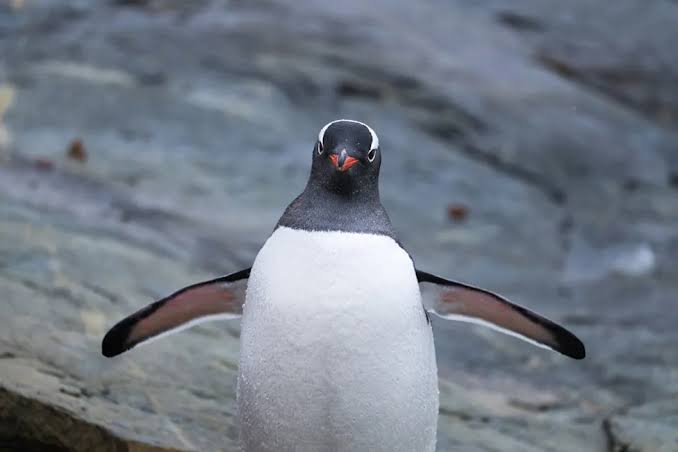

For more than a century, scientists believed they had the gentoo penguin figured out. They were wrong. A new genetic study has revealed that what was long considered one species is actually four distinct species , meaning one of them has been hiding in plain sight all along.
An international team of researchers has identified the southeastern gentoo penguin, scientifically named Pygoscelis kerguelensis, marking the first recognition of a new penguin species in more than a century. The discovery was made through genetic analysis of penguin populations in the subantarctic region, including the remote Kerguelen Islands in the southern Indian Ocean.
The finding challenges the long-standing classification of the gentoo penguin. Researchers determined that the birds previously grouped together as one species had actually evolved into four distinct species: the northern gentoo, southern gentoo, eastern gentoo and the newly recognised southeastern gentoo.
The newly recognised southeastern gentoo is particularly unusual because it does not look dramatically different from the other gentoos. Scientists describe it as a cryptic species because its distinction becomes apparent primarily through its genetic makeup rather than obvious physical characteristics.
Researchers from the University of California, Berkeley and Universidad de Los Lagos in Chile, together with scientists and conservation experts from five continents, conducted the study. Their findings were published in Communications Biology.
The genetic differences are believed to have developed as the penguin populations became geographically isolated and adapted to different environments over hundreds of thousands of years. The study therefore offers scientists new insight into how species can evolve while remaining remarkably similar in appearance.
But the discovery is not only about rewriting the penguin family tree. Researchers warn that climate change could threaten the habitats of three of the four newly recognised species, making accurate identification important for conservation efforts.
The discovery is being described as the first new penguin species recognised in more than 100 years, with the previous major recognition dating to the northern rockhopper penguin in 1921.
What looked like one penguin species was actually four , meaning scientists have not necessarily discovered a completely unfamiliar-looking bird, but have finally uncovered a hidden species that was there all along.