

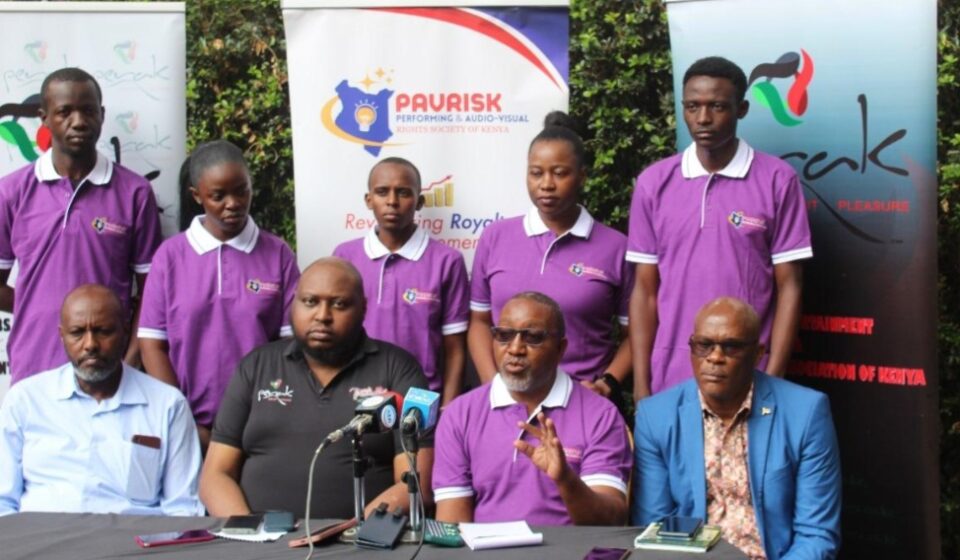

Kenyan creatives have received KSh43.6 million in the latest royalty distribution by the Performing and Audio Visual Rights Society of Kenya (PAVRISK), highlighting the growing importance of copyright management in the country’s creative economy.
The latest payout is almost double the KSh24 million distributed during PAVRISK’s previous general distribution. The increase has been described by the organisation as progress in its efforts to improve royalty collection and ensure that creators receive income when their copyrighted works are used.
Royalties are an important part of the creative economy because they allow musicians, producers and other rights holders to earn from the continued use of their work. A song, recording or audiovisual production can continue generating income long after it has been released, provided the rights are properly identified, licensed and managed.
PAVRISK officials, however, acknowledged that the royalty system continues to face challenges. Disputes among collective management organisations have created uncertainty over the collection and distribution of royalties, while legal battles have also affected the sector.
PAVRISK said it had faced numerous legal cases concerning the management of royalties. According to the organisation, such disputes can delay payments because users of copyrighted works may be uncertain about which organisation is legally authorised to collect the money.
Kenya Copyright Board chairman Joshua Kutuny has also called for greater transparency and urged collective management organisations to ensure that the required share of collected royalties reaches creators.
The developments come as Kenya increasingly digitises its copyright system. PAVRISK has moved aspects of its licensing processes onto the eCitizen platform, with the aim of making licensing more accessible and improving accountability.
Digital monitoring is also becoming increasingly important. As music and audiovisual content moves across streaming platforms, social media, broadcasters and other digital services, accurately tracking where and how creative works are being used is essential to ensuring that creators are compensated.
The KSh43.6 million payout therefore represents more than a financial figure. It reflects an ongoing attempt to build systems through which creative work can become a sustainable source of income.
For Kenya’s entertainment industry to grow, however, creators will need more than talent and audiences. Effective copyright protection, transparent royalty collection and reliable distribution systems will remain central to whether artists and other rights holders can turn their creative work into long-term livelihoods.