

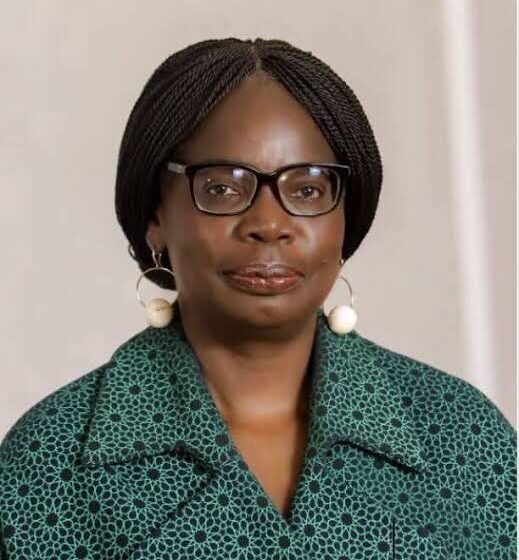

Kenya may be celebrating a diplomatic victory at the United Nations, but there is a detail many people could easily overlook: Professor Phoebe Okowa will not sit at the International Court of Justice to defend Kenya’s interests. Her duty will be to uphold international law independently, even when cases involving her own country come before the court.
Okowa has been re-elected as a judge of the International Court of Justice (ICJ) for a full nine-year term, securing Kenya’s continued presence on the United Nations’ principal judicial organ until 2036.
She secured 183 votes in the UN General Assembly and 13 votes in the 15-member Security Council during elections held in New York. Her victory followed several rounds of voting in a contest involving nine candidates competing for five judicial positions.
The election followed a competitive race in which Okowa faced candidates from other countries, including Sierra Leone’s Professor Charles Chernor Jalloh and Peru’s Luz del Carmen Ibáñez Carranza. Sierra Leone later withdrew Jalloh’s candidature and backed Okowa in an effort to retain Africa’s representation on the court.
Her new term will begin on February 6, 2027, and run until February 5, 2036. Okowa initially joined the court in November 2025 after being elected to complete the remaining term of Somali judge Abdulqawi Ahmed Yusuf, who had resigned.
A Professor of Public International Law at Queen Mary University of London, Okowa has built an extensive career in international legal affairs. She has also served on the United Nations International Law Commission since 2021, becoming the first African woman to serve on the expert body.
President William Ruto congratulated Okowa, describing her election as a moment of national pride and recognition of Kenya’s legal expertise. Foreign Affairs officials also welcomed the outcome, crediting diplomatic efforts and support from other countries for helping secure the seat.
The ICJ, based in The Hague, Netherlands, is responsible for resolving legal disputes between countries and issuing advisory opinions on legal questions referred to it by authorised United Nations bodies. Unlike the International Criminal Court (ICC), it does not prosecute individuals for crimes.
Although Kenya’s diplomatic campaign helped secure Okowa’s election, ICJ judges serve in their personal judicial capacity and are not representatives of their home governments. This means her decisions must be guided by international law rather than Kenya’s national interests.