

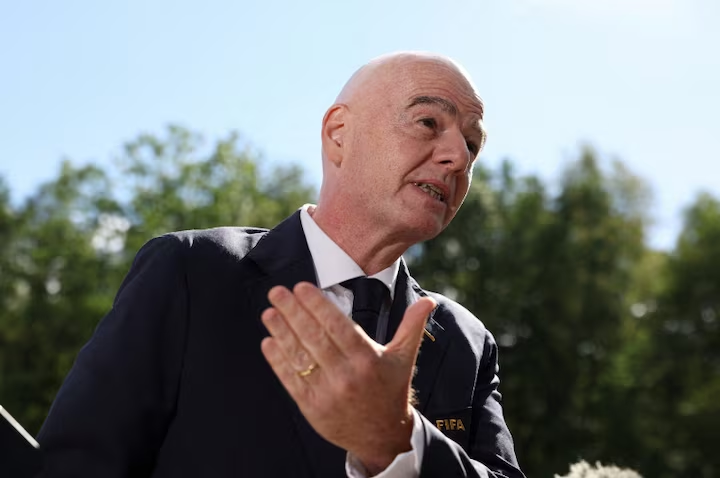

FIFPRO Europe has called for major reforms to FIFA’s governance, arguing that the collapse of FIFA President Gianni Infantino’s controversial Forward Enterprise initiative exposed serious weaknesses in the way global football is governed.
According to Reuters, the European football players’ union made the call on Monday, September 14, after the proposed initiative faced widespread opposition from football stakeholders and was eventually abandoned.
FIFPRO Europe said the withdrawal of the proposal did not resolve the underlying governance problems that allowed it to be developed in the first place.
The Forward Enterprise initiative was designed to commercially exploit major FIFA competitions and opportunities by attracting private investment.
The proposal generated opposition because of concerns over transparency, consultation and the role of football’s different stakeholders in major decisions.
FIFPRO Europe is now demanding a more inclusive decision-making system in which players, clubs and leagues have a formal role in determining the future of the sport.
Following the reports from Reuters, a study released by FIFPRO Europe in collaboration with Player IQ and Football Benchmark highlighted the major contribution made by European clubs to international football.
The study found that European clubs supplied 856 players for the 2026 World Cup, with those players representing an estimated €16.9 billion in value.
Despite that contribution, FIFPRO Europe argues that European players and clubs remain inadequately represented in FIFA’s decision-making structures.
The union also pointed to changes in the distribution of World Cup revenue.
According to Reuters, the proportion of World Cup revenue distributed to national federations has fallen from 10.5% in 2006 to 7.7% in 2026, even as overall tournament revenues have increased.
FIFPRO Europe has therefore called for an independent review of FIFA’s executive authority.
It also wants players, clubs and leagues to be formally included in football governance.
The union has not rejected the principle of solidarity payments to smaller football associations.
Instead, it argues that such funding should be determined through a transparent and collaborative process involving the different parts of the football community.
The dispute comes at a time when FIFA’s leadership is facing increased scrutiny over its approach to commercial partnerships and governance.
As of Monday, the Forward Enterprise proposal has been abandoned, but the controversy surrounding it has developed into a wider debate about who should have influence over the world’s most powerful football organisation.
According to FIFPRO Europe, the issue is therefore no longer simply about one failed commercial proposal but about the need to reform FIFA’s governance structure and give players and other football stakeholders a greater voice.