

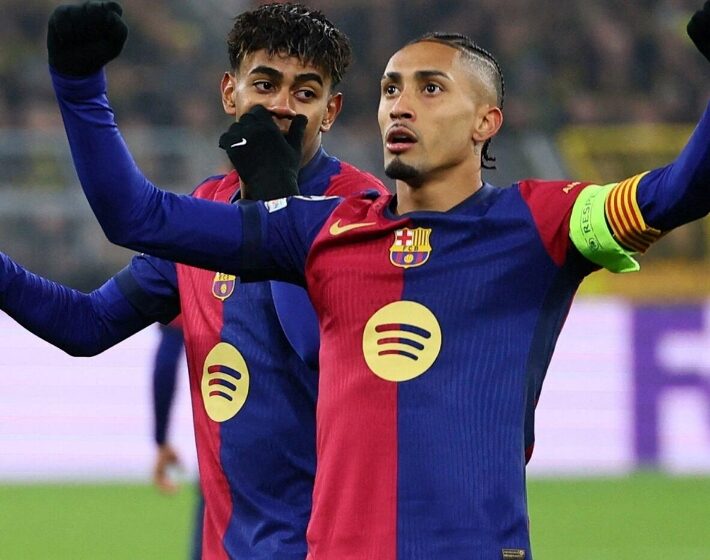

Ever noticed FC Barcelona captain Raphinha wearing two armbands during UEFA Champions League matches?
The unusual sight is not a mistake or a fashion choice. One represents UEFA’s competition requirements, while the other carries Barcelona’s distinctive senyera design and a history closely connected to the club’s Catalan identity.
Raphinha is Barcelona’s first-choice captain for the 2026/27 season, with Pedri serving as second captain. The club’s other captains are Eric García, Frenkie de Jong and Lamine Yamal.
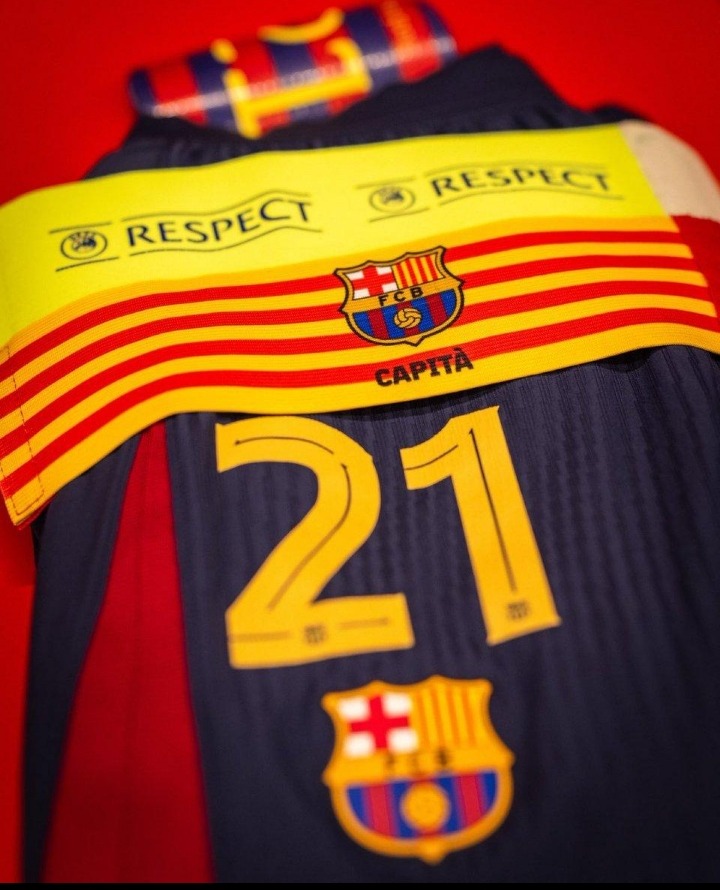
When Barcelona plays in UEFA competitions, its captain must wear the armband required by UEFA. The club, however, has also maintained its own traditional captain’s armband featuring the senyera, the red-and-yellow Catalan flag.
That is why the two armbands can appear together on the captain’s arm.
A TRADITION THAT GOES BACK DECADES
The story behind Barcelona’s traditional armband goes much further back than the modern Champions League era.
On 1 February 1976, Johan Cruyff became the first Barcelona captain to wear an armband bearing the colours of the senyera during a match against Athletic Club.
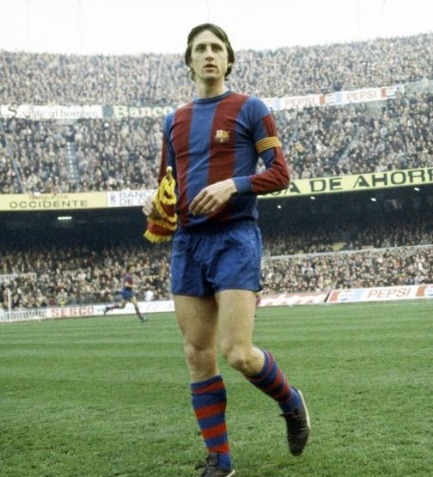
According to Barcelona’s own historical account, the moment came during a politically sensitive period in Spain, only months after the death of dictator Francisco Franco. The club viewed the use of the Catalan colours on the captain’s armband as an expression of its identity.
What appeared to be a simple piece of football equipment therefore became part of Barcelona’s visual identity.
The armband has remained associated with the club’s captains ever since.
PUYOL HELPED CREATE THE MODERN TWO-ARMBAND IMAGE
The modern practice of Barcelona captains wearing the club’s traditional armband alongside the UEFA-issued armband is particularly associated with Carles Puyol.
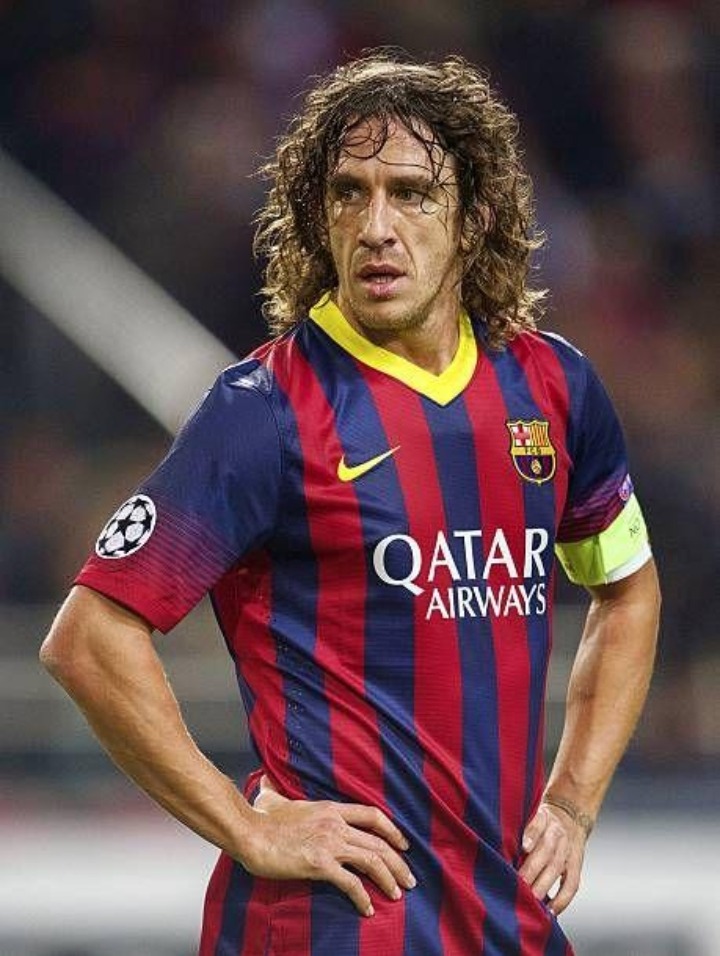
Puyol became Barcelona captain in the 2004/05 season and wore the captain’s armband for a decade. UEFA records that he took over the captaincy in 2004, while Barcelona records him as captain from 2004 to 2014.
During European matches, Puyol maintained the Barcelona identity represented by the senyera armband while also wearing the competition armband required by UEFA.
Later captains continued the practice, making the sight familiar to generations of Barcelona supporters.
WHY DOES UEFA HAVE ITS OWN ARMBAND?
UEFA competitions have their own regulations governing captain’s armbands and competition messaging.
The UEFA armband has been used to carry official competition messages, including campaigns such as “Respect” and “No to Racism.” Barcelona therefore cannot simply replace the required competition armband with its own traditional design when playing in UEFA competitions.
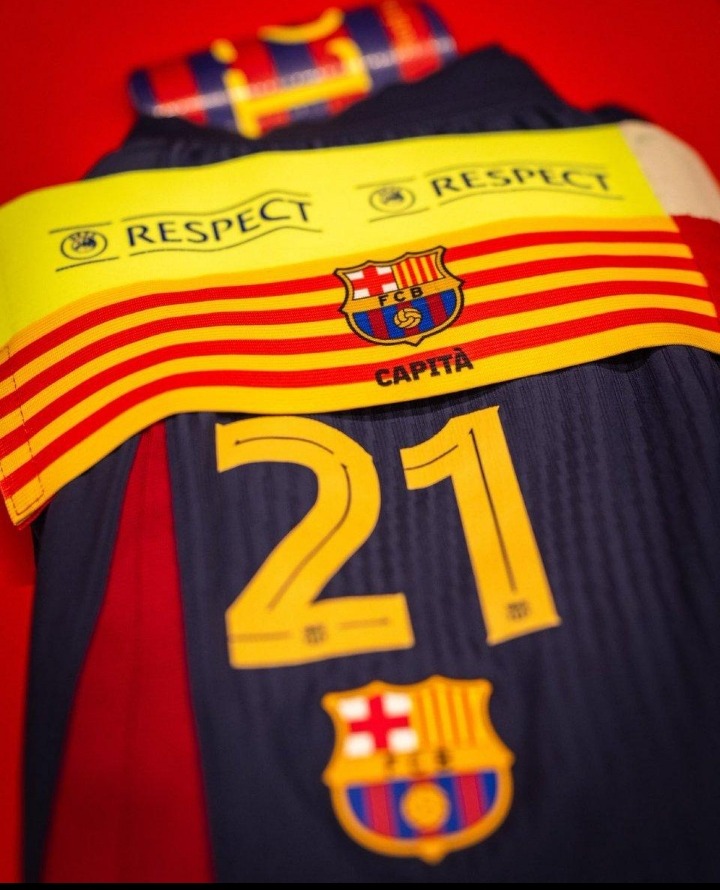
The second armband allows the Barcelona captain to retain the club’s traditional symbol while complying with UEFA competition requirements.
It is therefore a combination of competition rules and club tradition.
FROM CRUYFF TO RAPHINHA
Almost five decades separate Cruyff’s first senyera armband appearance from Raphinha’s current role as Barcelona captain.
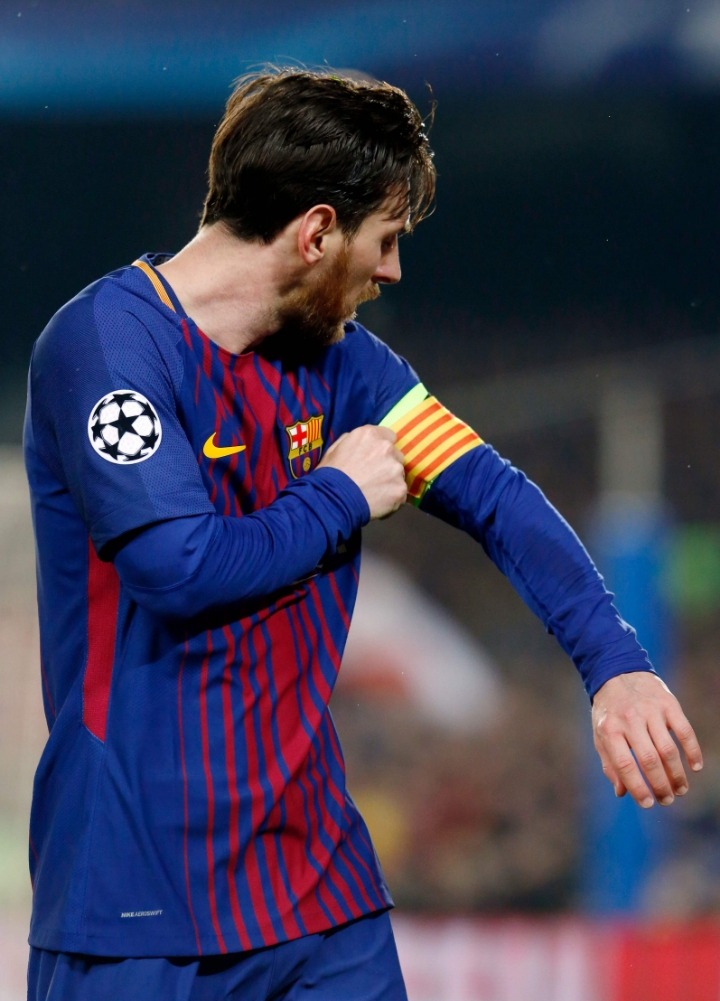
In 2026, the Brazilian is carrying the tradition into a new era.
Raphinha was appointed Barcelona’s first captain for the 2026/27 season by coach Hansi Flick, while Pedri was named second captain.
His captaincy has already produced memorable moments on the pitch. In September, Raphinha scored a hat-trick in Barcelona’s 3-1 victory over Sevilla, taking his league tally to 12 goals in seven matches at that point.
And when Raphinha was substituted during Barcelona’s Champions League victory over Feyenoord, the armband passed to 19-year-old Lamine Yamal, who subsequently became the youngest player ever to captain Barcelona.
MORE THAN JUST AN ARMBAND
For an ordinary football fan, two armbands might look like an unnecessary duplication.
For Barcelona, however, they tell two different stories.
The UEFA armband represents the competition and the responsibilities attached to playing in European football.
The senyera armband represents Barcelona’s own history and identity.
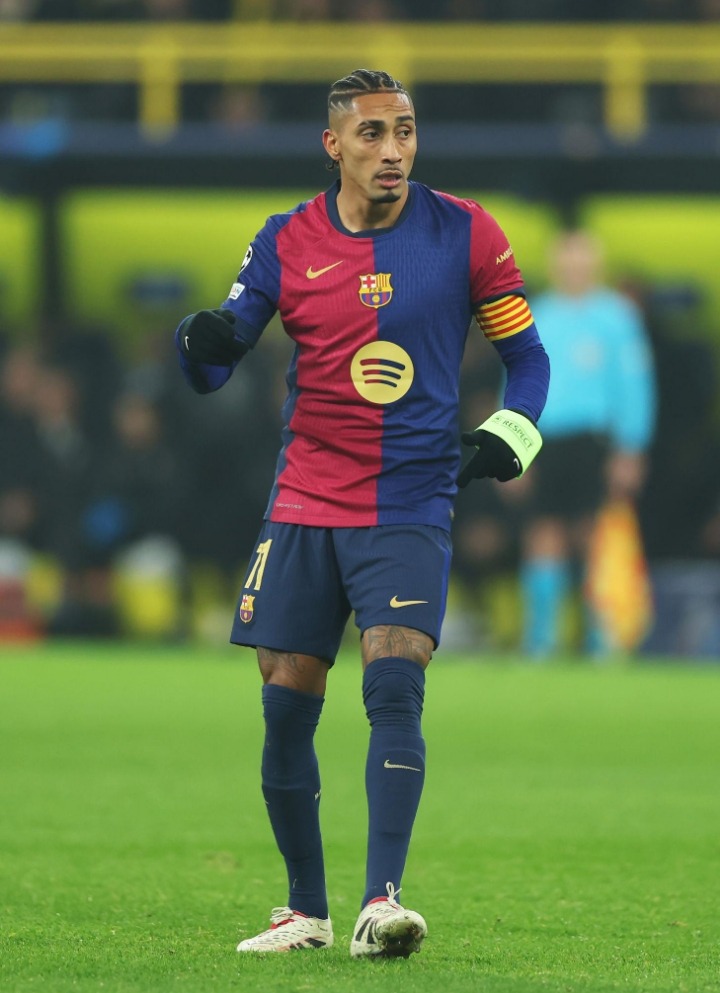
So when Raphinha walks onto a Champions League pitch wearing both, he is carrying UEFA’s competition identity on one arm and Barcelona’s historic identity on the other.
That small detail has survived generations of Barcelona captains — from Cruyff and Puyol to the current captaincy led by Raphinha.
What looks like two simple bands of fabric is, in reality, a visual reminder of nearly five decades of Barcelona football history.