


Australian Prime Minister Anthony Albanese has again refused to apologise to Japanese Prime Minister Sanae Takaichi over remarks that have sparked the so-called “Melongate” controversy. The issue was raised during Question Time in Australia’s Parliament.
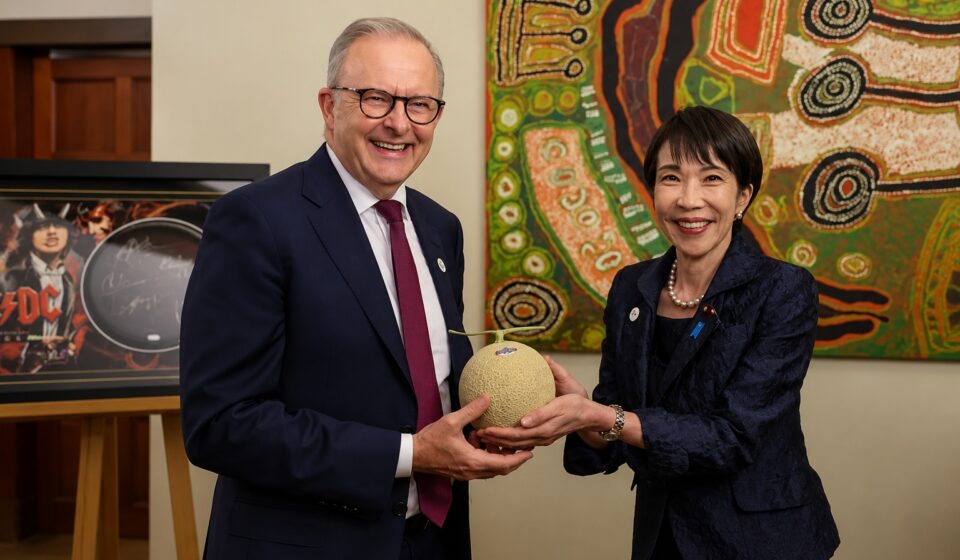
The controversy began after Albanese spoke about two Japanese Crown Melons that Takaichi gave him during her visit to Australia earlier this year. The melons, from Japan’s Shizuoka Prefecture, were presented as a diplomatic gift during the leaders’ meeting.
During a podcast appearance, Albanese made a joke about the melons while making hand gestures that critics interpreted as sexual innuendo. The Prime Minister has rejected that interpretation, insisting that there was no sexual intention behind his comments.
Opposition politicians have condemned the remarks and called on Albanese to apologise to Takaichi. Liberal MP Mary Aldred pressed the Prime Minister during Question Time, arguing that his comments were inappropriate and disrespectful.
Albanese, however, stood by his position and declined to issue an apology. He instead highlighted the strong relationship between Australia and Japan and said the two countries continued to work closely together on economic and strategic issues.
The controversy has generated significant debate in Australia, with critics accusing the Prime Minister of poor judgement while supporters argue that the remarks have been exaggerated. Reports have also suggested that Japanese officials viewed the incident as having no harmful intent and were reluctant to escalate it publicly.
Despite the political backlash, Albanese continues to reject calls for an apology, leaving “Melongate” as an unusual diplomatic controversy between two countries that maintain close ties.
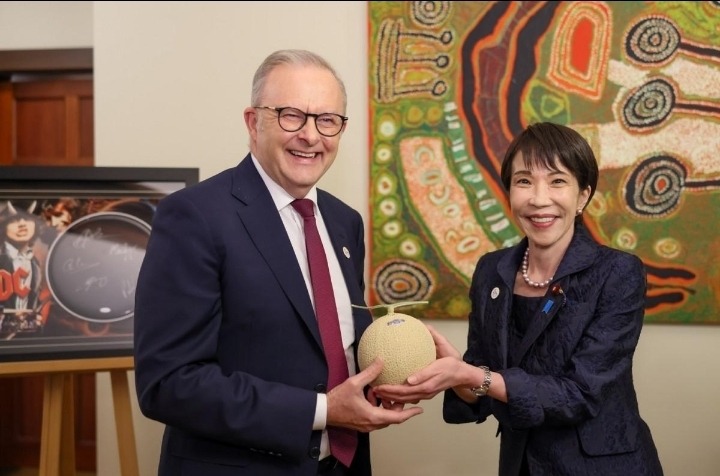
Australian Prime Minister Anthony Albanese and Japanese Prime Minister Sanae Takaichi during a diplomatic meeting, amid the controversy over Albanese’s remarks about the Japanese Crown Melons.