

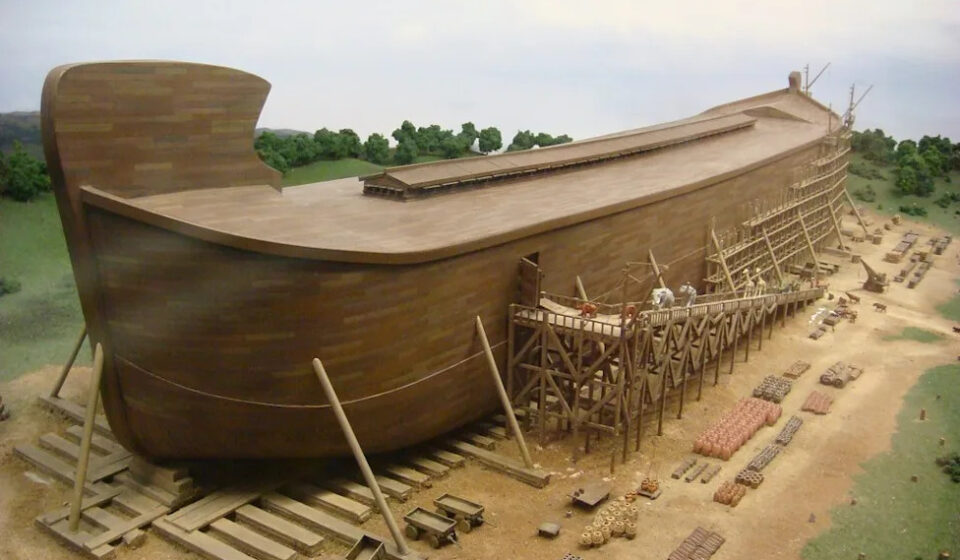

For centuries, the story of Noah’s Ark has existed at the intersection of faith, history and legend. Now, fresh underground scans and drilling at a mysterious boat-shaped formation in Turkey are reopening the debate , but researchers still have no definitive proof that the biblical vessel has been found.
A renewed investigation into a mysterious boat-shaped geological formation in eastern Turkey has reignited the long running debate over whether the site could be connected to the biblical story of Noah’s Ark.
The formation, known as the Durupınar site, is located in Turkey’s Ağrı Province near Mount Ararat, an area that has attracted researchers and religious historians for decades because of claims that it could represent the resting place of Noah’s Ark.
The latest investigation has introduced new technology and field research into the debate. Researchers involved in the Noah’s Ark Scans project have been conducting geophysical surveys of the formation, including ground-penetrating radar (GPR) scans designed to examine what lies beneath the surface.
According to the research team, the scans have identified unusual underground patterns that they believe could include corridors, chambers and other structural features beneath the boat shaped formation.
The researchers have also reported finding organic-rich material in soil samples collected from the area, which they say is being investigated for possible traces of ancient material. Their findings have strengthened their belief that the formation deserves further archaeological and geological examination.
The investigation moved into another phase this month, with drilling beginning at the site. The drilling is intended to allow researchers to investigate the underground structures more closely and obtain samples from beneath the formation.
The research project is being led by archaeologist Professor Cenker Atila of Sivas Cumhuriyet University in cooperation with the Noah’s Ark Scans team. The project says it received official approval from Turkish authorities and involves geological and archaeological research at the site.
Researchers are also planning to use a remotely operated robotic device known as Gopher to explore underground areas and collect additional information from locations that cannot easily be reached by conventional excavation.
The latest discoveries have generated renewed excitement because some of the reported underground patterns have been interpreted by the research team as potentially consistent with an artificial structure.
However, this is where the story becomes controversial.
The Ark has not been scientifically confirmed.
The Durupınar formation has been studied for decades, and previous geological investigations have concluded that it is a natural geological formation, rather than the remains of a giant ancient vessel. Critics of the Ark hypothesis have argued that its unusual boat-like shape can be explained by geological processes.
The current research team disputes that interpretation and argues that the latest radar and soil findings warrant further investigation. Their project says the evidence currently being gathered could help determine whether the structures beneath the formation are natural or potentially man-made.
That distinction is important because headlines claiming that Noah’s Ark has been 100% confirmed go further than the evidence currently establishes.
Recent reporting indicates that the researchers themselves are continuing their investigation, with more analysis expected before definitive conclusions can be made.
The Durupınar formation was first identified in 1959 and has since become one of the world’s most discussed proposed locations for Noah’s Ark. Its distinctive shape, proximity to Mount Ararat and apparent resemblance to a vessel have kept the site at the centre of repeated investigations.
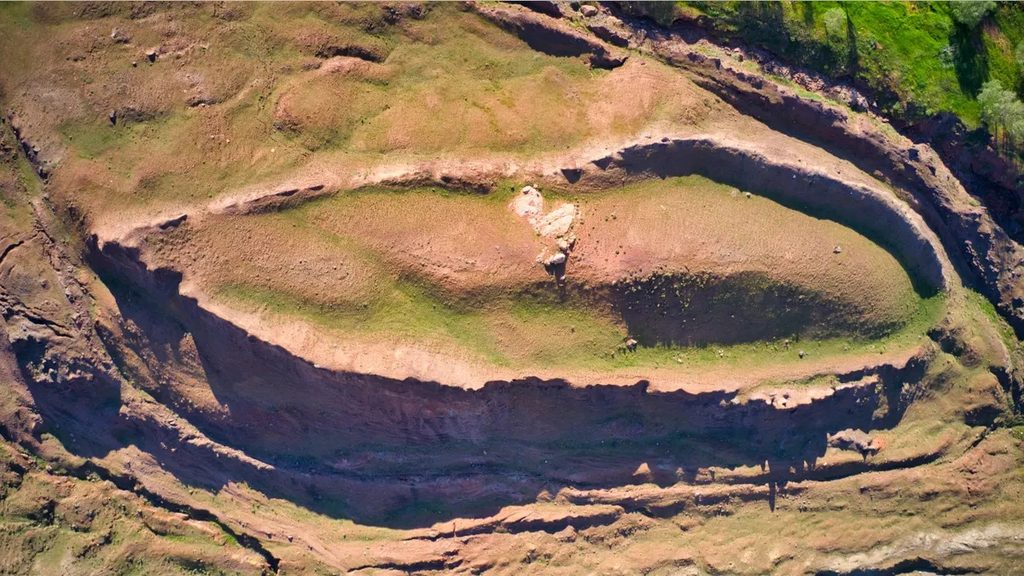
Now, more than six decades after its discovery, researchers are once again drilling into the formation and using modern scanning technology to investigate what may be hidden beneath it.
Whether the findings eventually reveal an ancient man-made structure, an archaeological site or simply another unusual geological formation remains unresolved.
For now, the new evidence has reopened the mystery, not solved it