

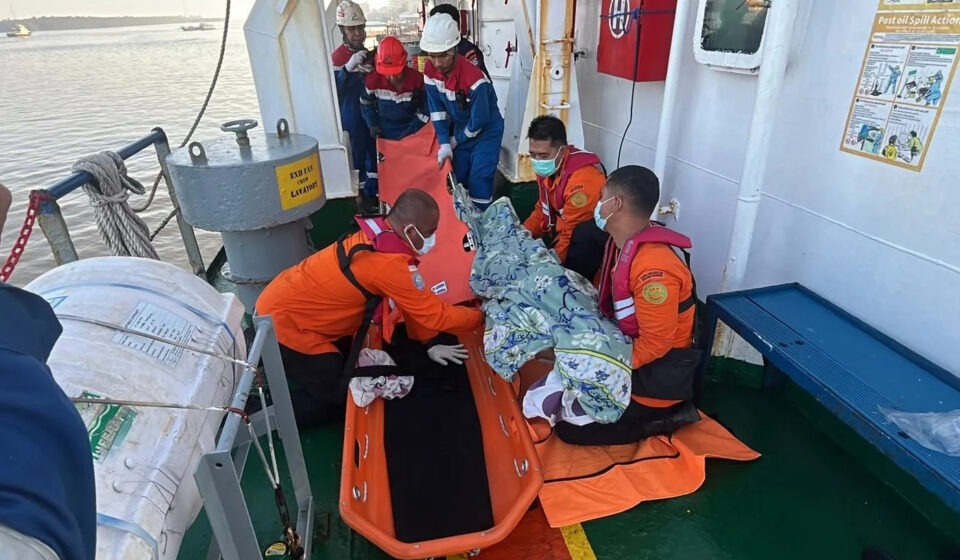

How many more lives could be lost before the sea gives up its victims? Indonesia is facing a desperate race against time as rescuers continue searching for 129 people still missing after a passenger ferry capsized in the Java Sea, with rough seas and strong winds threatening to derail the operation.
The Virgo Transport 8 overturned early Sunday, September 13, while travelling from Surabaya in East Java to Banjarmasin in South Kalimantan. The ferry was carrying 243 people, including 213 passengers and 30 crew members, as well as 89 vehicles.
Authorities have so far rescued 108 people, while six deaths have been confirmed. The remaining 129 passengers are still unaccounted for as rescue teams enter the third day of operations.
The search has involved hundreds of rescuers, naval and rescue vessels, helicopters and aircraft. However, rough waves, strong winds and difficult underwater conditions have slowed efforts to reach parts of the overturned vessel. Officials have been preparing underwater searches using divers and remotely operated equipment as conditions allow.
The scale of the disaster became clearer after a survivor described the final moments aboard the ferry. Crew member Rizky Apriansyah said the vessel suddenly tilted by about 30 degrees as waves reaching around four metres struck it. He said the ferry overturned in less than 10 minutes, leaving survivors struggling in the water. Rizky and others reportedly spent about 10 hours drifting before being rescued.
The ferry’s captain had earlier reported severe weather and the vessel listing before contact was lost. The exact cause of the capsizing remains under investigation, with authorities yet to establish whether weather, mechanical problems or other factors contributed to the accident. Officials have said the vessel was not overloaded.
The tragedy has left relatives gathered at ports and emergency command centres waiting for news of their loved ones, with rescue officials continuing to update lists of survivors and victims.
The disaster has also renewed questions about maritime safety in Indonesia, an archipelago of more than 17,000 islands where ferries remain an essential means of transport. The Java Sea accident comes amid several other ferry incidents in the region this year, intensifying scrutiny of safety measures in the country’s heavily used maritime transport network.
For now, rescue teams remain focused on one objective , finding the 129 people still missing ,as deteriorating sea conditions continue to make every hour critical.