

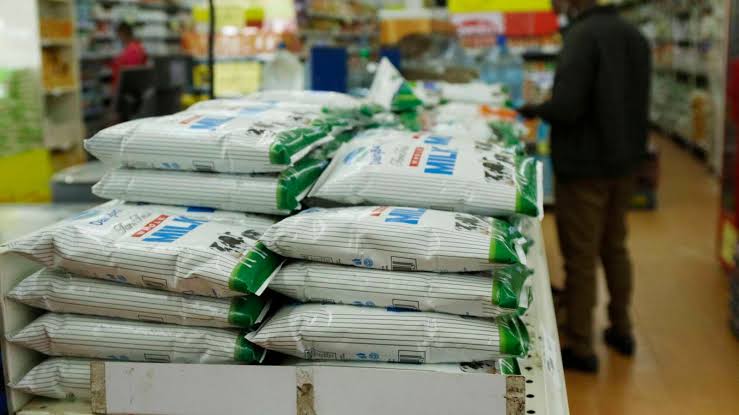

Milk is disappearing from supermarket shelves while Kenyan families are being forced to pay more for a basic household staple, raising questions over why the government has remained largely silent as the dairy sector struggles with a worsening supply crisis.
Brookside, Tuzo and KCC products have reportedly disappeared from some supermarket shelves, while the price of a 500ml packet has risen several times in a single week in some outlets.
In Nairobi, milk prices have increased by between Sh4 and Sh12, with retailers blaming reduced deliveries from suppliers. One retailer reportedly ordered 100 cartons but received only 24, while some outlets have introduced limits on the amount of milk customers can purchase.
The shortage is being linked to deteriorating conditions in the dairy sector, with prolonged dry weather reducing fodder availability and pushing up the cost of keeping cows.
National milk production fell to a 22-month low in April 2026, following a 20 per cent decline in rainfall across key agricultural areas.
The impact is being felt directly by farmers. Some dairy cooperatives are now paying up to Sh55 per litre, compared with about Sh42 in December 2025, as processors compete for increasingly limited supplies.
Feed costs have also surged, with the Association of Kenya Feed Manufacturers reporting a 45 per cent increase driven by shortages of maize germ, soybean meal, canola and sunflower cake.
A bale of Rhodes grass that previously cost about Sh250 is now selling for as much as Sh450 in parts of Nakuru and Kiambu.
The rising costs have hit small-scale farmers particularly hard. Smallholders account for nearly 80 per cent of Kenya’s milk production, but some farmers say daily yields have fallen from between seven and nine litres per cow to as little as four to five litres.
The Kenya Dairy Board has warned that some farmers are being forced to sell productive cows because they can no longer afford feed and other costs.
The shortage has also raised concerns about the long-term impact on Kenya’s dairy herd, with livestock sold during a crisis unlikely to be quickly replaced even when weather conditions improve.
Meanwhile, consumer groups are questioning the government’s response.
The Consumers Federation of Kenya (COFEK) has called on the Ministry of Agriculture and Livestock Development and the Kenya Dairy Board to publicly disclose the extent of the shortage and provide a timeline for restoring normal supplies.
COFEK has also proposed a temporary and transparent import window for UHT and powdered milk, as well as duty relief on imported animal-feed inputs to ease pressure on farmers.
The government has previously focused on curbing the sale of raw milk through unregulated channels, citing public health concerns. However, consumers and retailers are now demanding answers over the immediate shortage and rising prices.
With supermarket shelves thinning and production under pressure, the question facing consumers is increasingly uncomfortable: how much more will Kenyans have to pay for milk before the government acts?