

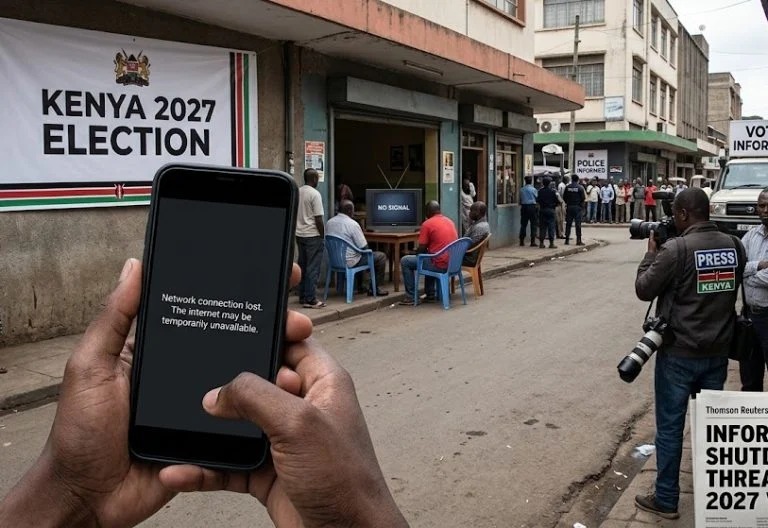

Kenya could be heading for an election where the internet goes dark and journalists face tighter restrictions, with a new Thomson Reuters Foundation report warning that media and internet shutdowns could become more common during the 2027 General Election.
The report, titled Weaponising the Law : Threats to Media Freedom in Kenya, examines legal, technological and other threats facing journalists and media organisations in the country.
According to the report, restrictions on internet and communication channels during politically charged periods could disrupt real-time journalism, limit public access to information and create an information vacuum that allows misinformation to spread.
The warning comes after Kenya experienced internet disruptions during the 2024 Gen-Z-led protests. The Foundation notes that the country had largely avoided government or administrative interference with internet access during previous politically sensitive periods, including the 2022 General Election.
The report warns that internet shutdowns can prevent journalists from transmitting live updates, accessing sources and verifying information, while also making it harder for citizens to access accurate information.
The Foundation’s research found that 42 per cent of media actors surveyed had faced legal threats linked to their work, including litigation, arrest and the shutdown of online platforms.
Sixty-five per cent of media professionals identified stronger legal protections as their top support need for sustaining journalism.
The report identifies six major categories of threats to media freedom: abuse of court processes, regressive legislation, weak implementation of media laws, technology facilitated harms, journalist safety and impunity, and the sustainability of the media industry.
With the 2027 elections approaching, the warning has raised fresh concerns over whether restrictions on information access could become part of Kenya’s political landscape during the polls.