

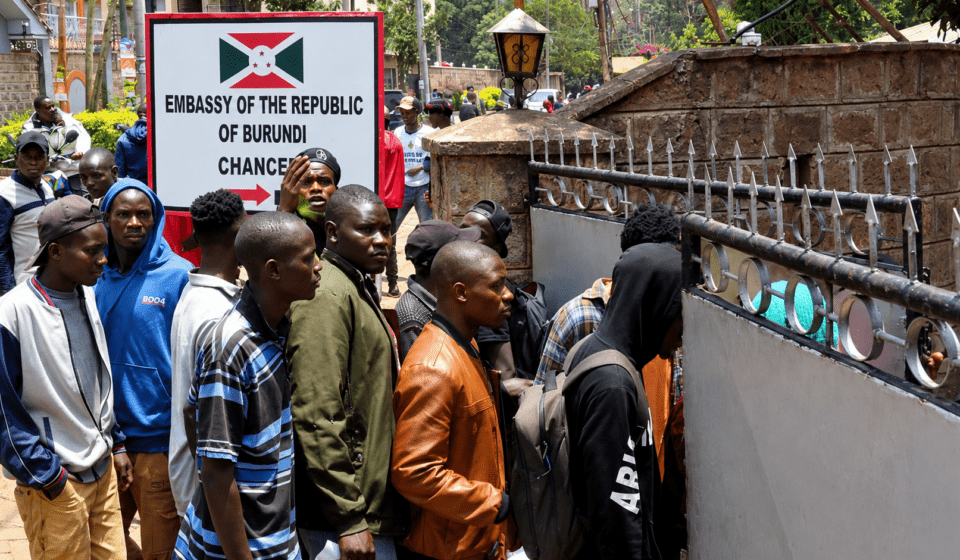

Is Kenya protecting its small businesses, or slowly becoming hostile to foreigners? That question is now at the centre of a growing debate after hundreds of Burundian nationals thronged their embassy in Nairobi, some carrying suitcases and personal belongings as they sought documents to return home amid the government’s crackdown on foreigners operating businesses without valid permits.
The extraordinary scenes at the Embassy of Burundi along Dennis Pritt Road in Kilimani offered a striking picture of a community caught between Kenya’s enforcement of immigration laws and the livelihoods and families they have built in the country.
Some Burundians arrived with bags, bundles of personal effects and suitcases, saying they were preparing to leave businesses and lives they had spent years building in Kenya.
For some, however, leaving is not as simple as packing a suitcase.
Several Burundian nationals have married Kenyans and raised children in the country, including children who acquired Kenyan citizenship by birth. The crackdown has therefore left some families facing painful choices over whether to leave together, remain in Kenya or risk separation.
The government maintains that the operation is not targeting foreigners because of their nationality, but those operating without the required work permits, business licences and other legal documentation.
Kenyan traders, meanwhile, are backing the crackdown, arguing that foreigners operating outside the regulatory framework have an unfair advantage over local traders who pay taxes and licensing fees.
But concerns over treatment of foreigners have intensified following incidents of hostility.
In a recent widely circulated video, a Kenyan man was seen verbally confronting and harassing a Burundian tea and mandazi vendor, prompting condemnation and renewed fears over xenophobic attitudes.
Foreign traders from other communities have also faced growing hostility. Chinese , owned retail businesses, including outlets such as China Square, have previously come under pressure from Kenyan traders who accuse them of undercutting local businesses and taking over markets traditionally dominated by Kenyans.
The government has, however, warned against turning enforcement into harassment, insisting that foreigners who are legally documented have nothing to fear.
The massive turnout at the Burundian Embassy also created a logistical challenge, with officials acknowledging the difficulty of processing such a large number of applicants at once.
Late Monday evening, Foreign Affairs Principal Secretary Korir Sing’oei visited the Burundian nationals who remained at the embassy, assuring them of government support to ensure they are properly documented or voluntarily repatriated.
But as suitcases lined up outside the embassy and hundreds waited for travel documents, one uncomfortable question remained:
Is Kenya simply enforcing its laws, or are the images of foreigners preparing to leave evidence that the country is becoming less welcoming to those who came here to make a living?