

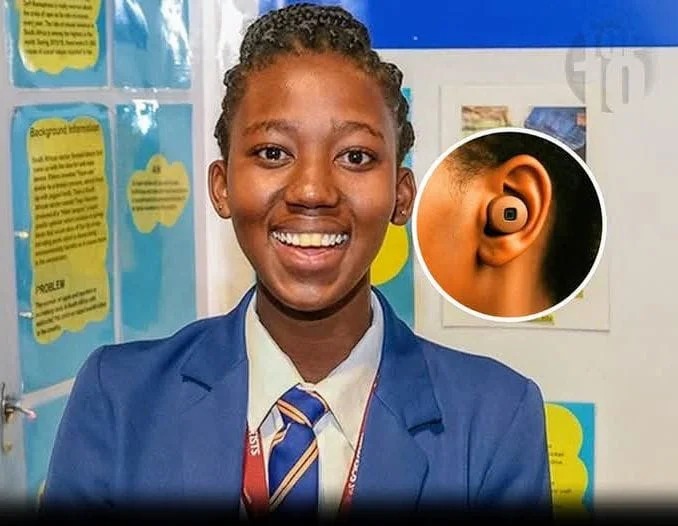

What if the jewellery women wear every day could secretly become a lifeline when reaching for a phone could put their lives in even greater danger?
That is the question behind an invention developed by South African innovator Bohlale Mphahlele, who was just 16 when she designed a prototype safety device disguised as an ordinary earring.
Mphahlele, then a Grade 11 learner at SJ van der Merwe Technical High School in Limpopo, developed the device in 2020 against the backdrop of South Africa’s persistent gender-based violence and human-trafficking crisis.
Dubbed the Alerting Earpiece, the prototype was designed to help women and children discreetly seek assistance in situations where pulling out a phone, making a call or visibly asking for help may not be possible.
The device incorporates a concealed alert mechanism and was designed to capture images of a suspected attacker while transmitting the wearer’s location to connected devices. The aim was to provide both an emergency alert and information that could potentially help identify a perpetrator.
Its discreet design is central to the concept.
Rather than carrying an obvious panic button that an attacker could spot, the device is intended to blend into an everyday accessory, allowing a user to activate an alert without immediately revealing what she is doing.
Mphahlele showcased the prototype at the Eskom Expo for Young Scientists, competing in engineering, electronics and embedded systems, where the project earned a bronze medal. Her invention was also recognised by Limpopo education officials and later received attention in South Africa’s National Assembly.
The invention has resurfaced in 2026, with renewed attention online as South Africa continues to grapple with violence against women and children.
But there is an important reality behind the excitement: the Alerting Earpiece began as a prototype, not a widely available commercial product. Recent reports say Mphahlele has continued working towards turning the idea into a functional product and has pursued technology and entrepreneurial development since completing high school.
The story has nevertheless reignited debate over how technology can be used to protect women in situations where conventional safety measures may fail.
For a teenager to look at a crisis facing millions and ask whether something as ordinary as an earring could become a silent call for help is remarkable.
But it also raises an uncomfortable question:
Why are young innovators having to invent new ways for women to survive situations in which they should never have been placed in danger in the first place?